If you are shopping for an older Honda Civic Hybrid, I would put 2006–2008 at the top of the inspection list. That is not because every car from those years is bad. It is because Honda itself issued a product update for all 2006–2008 Civic Hybrids to help prevent premature IMA battery deterioration, then later extended IMA battery coverage on some 2003–2008 cars.
The 2003–2005 cars also deserve plenty of caution simply because the original hybrid hardware is now more than two decades old. The 2009–2011 cars are not in the same 2006–2008 deterioration campaign, but they still use the older nickel-metal-hydride IMA system and should be bought on battery history, not reputation. If prices are close, the 2012–2015 lithium-ion cars are the easier old-Civic-Hybrid starting point.
One important boundary: the 2025–2026 Civic Hybrid is a different generation of hybrid system. It returned after the older Civic Hybrid had been gone from the U.S. market for roughly a decade. It is too new to put on an “avoid years” list with the 2003–2015 cars.
The years I would inspect most carefully
| Model years | My used-buyer view | What matters most |
|---|---|---|
| 2006–2008 | Highest caution | IMA battery condition, proof of Honda software update, replacement-battery history, warning lights and assist behavior |
| 2003–2005 | High caution | Age of the battery pack, replacement documentation, IMA warning history and overall condition |
| 2009–2011 | Buy only with strong evidence | Battery age or replacement history, correct battery/software match, charging and assist behavior |
| 2012–2015 | Better old-hybrid starting point | Lithium-ion battery health, CVT service history, warning lights and normal age-related wear |
| 2025–2026 | Too new to label “avoid” | Normal VIN recall check and service history; do not judge it by old IMA problems |
This ranking is deliberately not based on raw complaint totals alone. Complaint databases are useful for finding symptoms worth investigating, but they do not tell you how many cars were sold, how many remain on the road or how many owners had no problem at all. For this guide, Honda technical documents carry more weight than a simple complaint-count leaderboard.
Why 2006–2008 Civic Hybrids stand out
Honda Service Bulletin 10-034 is the strongest reason to give these years extra scrutiny. The bulletin applied to all 2006–2008 Civic Hybrids and described a software update intended to help prevent IMA battery deterioration. Honda explained that frequent stop-and-go driving with air-conditioning use, especially in warm weather, could keep the battery at a low state of charge and, over time, contribute to deterioration and eventual failure.
The corrective action was not simply a dashboard reset. Honda called for updates to the engine-control and IMA battery software, with CVT software updated when needed. The revised strategy kept more energy in reserve for starting from a stop and initial acceleration.
That makes a used-car question very simple: show me the history. A seller saying “the hybrid battery is fine” is not the same thing as an invoice for a battery replacement, dealer records showing the software campaign, or a scan showing no current IMA faults.
There is another reason not to treat battery replacement as a checkbox. Honda Service Bulletin 10-083 covered IMA battery software and hardware updates for 2003–2011 Civic Hybrids. Honda warned that a replacement battery type needed matching control software; a mismatch could reduce battery life. On a car that has already had a pack replaced, the useful question is not only when it was replaced, but what battery was installed and whether the corresponding software was loaded.
2003–2005: old enough that the paperwork matters more than the mileage
The first Civic Hybrids are now 21–23 years old. At that age, I would not buy one because it has “only 90,000 miles” and assume the low odometer is good news. Hybrid batteries age by time as well as use, and a low-mileage car can still have an old pack.
Honda later issued a warranty extension covering the IMA battery module on some 2003–2008 Civic Hybrids. That historical warranty is long expired on cars this old, but it matters as evidence: Honda formally recognized enough battery-related concern to extend coverage for eligible vehicles.
A first-generation Civic Hybrid with a documented replacement pack, correct software, clean scan and stable assist behavior can be a more rational purchase than a lower-mileage car on an unknown original battery. I would also check the rest of the car as an old Honda, not just as a hybrid: cooling system, suspension, rust, brakes, tires, 12-volt charging health and transmission operation still matter.
2009–2011: not the same campaign, but still an aging IMA car
It would be easy to call 2009–2011 “safe” because Honda’s 10-034 battery-deterioration product update specifically named 2006–2008. I would not make that leap.
The 2009–2011 Civic Hybrid still belongs to the older IMA era and still appears in Honda’s battery software/hardware bulletin. In 2026, even the newest 2011 example is 15 years old. That makes the current condition of the battery pack more important than the absence of one particular campaign.
For these cars, I want to know whether the IMA battery has ever been replaced, whether the replacement came with the correct software, whether the IMA light has appeared recently and whether the state-of-charge display behaves normally on a long road test. A seller clearing codes shortly before the sale is a bigger red flag than a worn steering wheel or a few cosmetic scratches.
2012–2015 are the better place to start if you want an old Civic Hybrid
The 2012 Civic Hybrid was a meaningful technical break. Honda introduced a lithium-ion battery to the Civic Hybrid for the first time, paired with a 1.5-liter gasoline engine and CVT. The 2013 Civic Hybrid continued that lithium-ion IMA setup.
That does not make 2012–2015 battery-proof. A 2012 pack is now about 14 years old, and any hybrid battery can become expensive when age, heat, cell imbalance or prior repair history catches up with it. But these cars are not part of the 2006–2008 IMA deterioration campaign, and they are the group I would shop first among the discontinued 2003–2015 Civic Hybrids.
If a 2012 and a 2013–2015 car are priced similarly and have equally strong records, I would lean toward the later car. Honda substantially revised the Civic for 2013 after criticism of the 2012 redesign’s refinement, interior and road manners. That is an ownership-quality preference, not evidence that the 2012 hybrid battery itself should be avoided.
Do not lump the 2025–2026 Civic Hybrid in with the old IMA cars
Honda brought the Civic Hybrid name back for 2025 with its newer two-motor hybrid-electric system. It is a different powertrain concept from the old IMA Civic Hybrids and arrived after roughly a decade without a Civic Hybrid in the U.S. lineup.
As of September 2026, there is not enough long-term aging data to make a responsible “avoid 2025” or “avoid 2026” claim. A current recall or service campaign should be handled by VIN, but old 2006–2008 IMA battery history is not evidence against a 2025–2026 car.
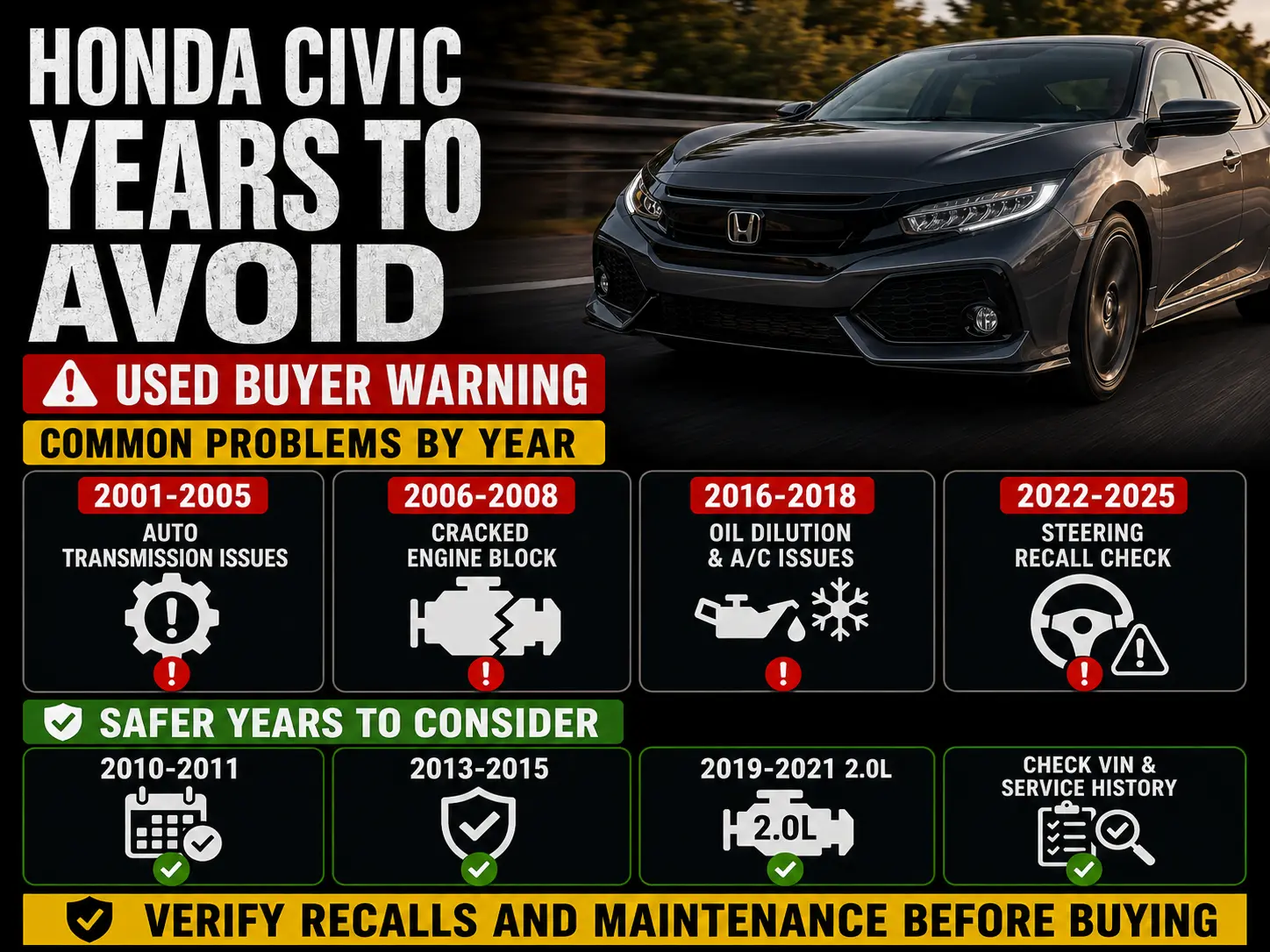
If you are comparing generations rather than one specific used listing, our Honda Civic generations guide gives the broader model timeline. For non-hybrid Civic risk, use the separate Honda Civic years to avoid guide so the old hybrid battery story does not get mixed with automatic-transmission, engine-block, turbo or steering issues from other Civic configurations.
What I would check before buying one
A used Civic Hybrid can look completely normal during a five-minute test drive. I would give the hybrid system enough time to show its behavior.
- Start with a cold car. Warning lights that appear only at startup or disappear after a restart are still useful information.
- Scan every control module before codes are cleared. Do not rely only on the absence of a check-engine light.
- Watch the battery state-of-charge display. Rapid, repeated swings from high to low charge deserve investigation, especially when paired with weak assist or an IMA warning.
- Drive it with the A/C on. The 2006–2008 Honda bulletin specifically discussed stop-and-go driving with A/C use as a condition that could keep the battery at a low state of charge.
- Ask for the hybrid-battery invoice. The date, battery type, supplier and installer matter. “Previous owner changed it” is not documentation.
- Verify software history after a replacement pack. Honda documented that the battery type and control software need to match.
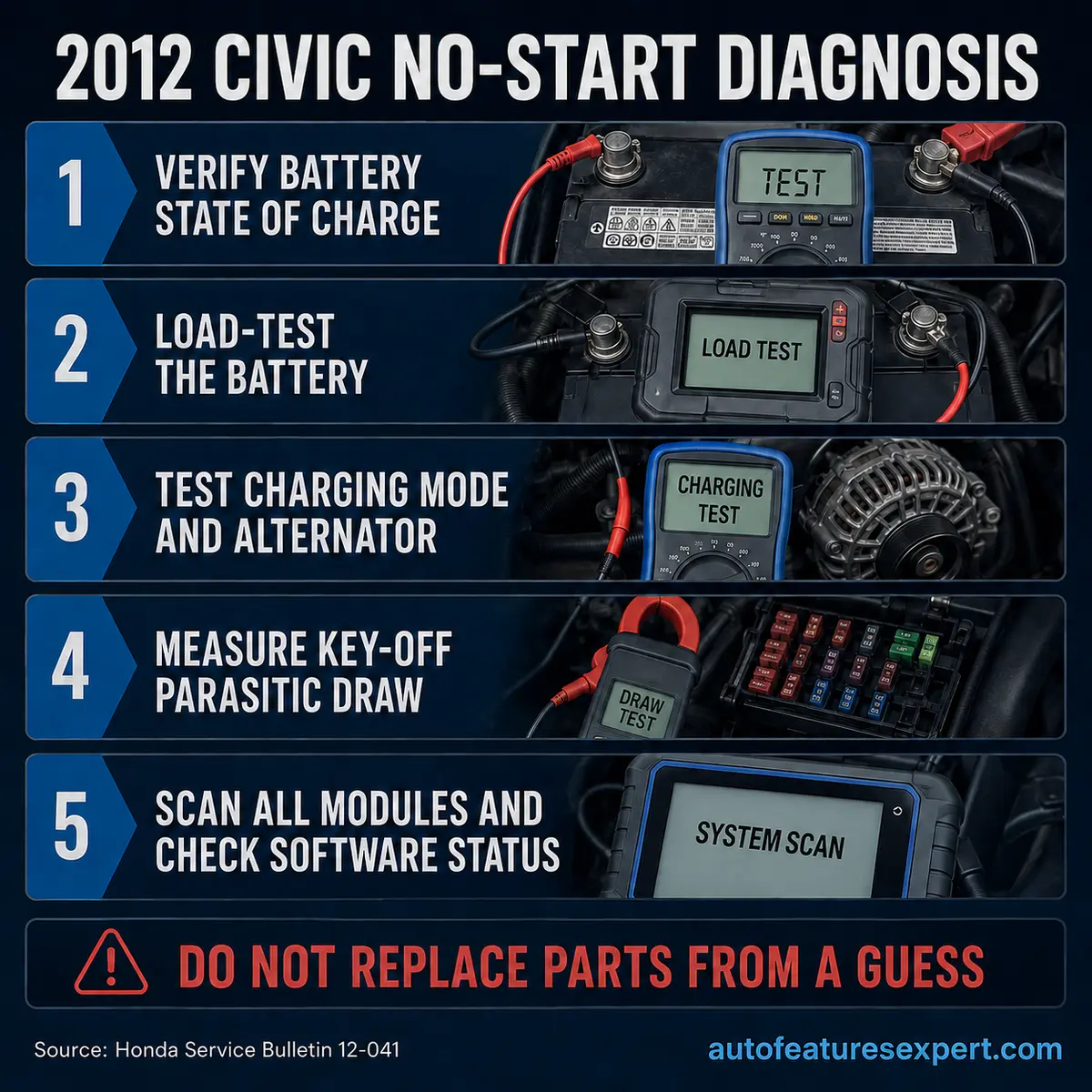
- Check the 12-volt battery and charging system. A weak 12-volt battery can create confusing electrical symptoms and is cheap enough that it should be tested, not guessed at.
- Road-test the transmission from cold to fully warm. Listen and feel for shudder, hesitation, abnormal flare or inconsistent takeoff.
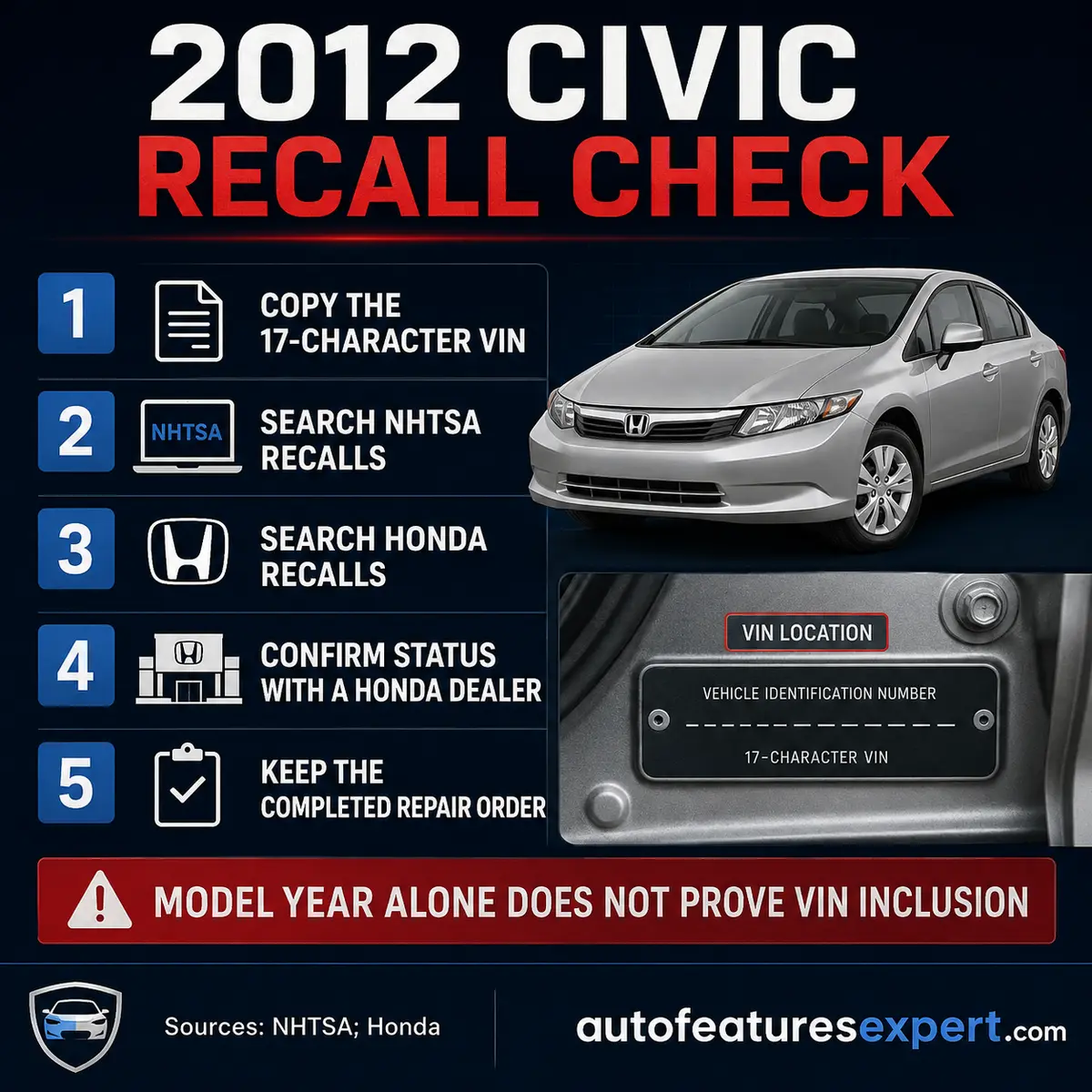
- Run the VIN for recalls and campaigns. Model year alone cannot tell you whether a specific car was included or repaired. Our Honda Civic recalls guide explains the VIN-first process.
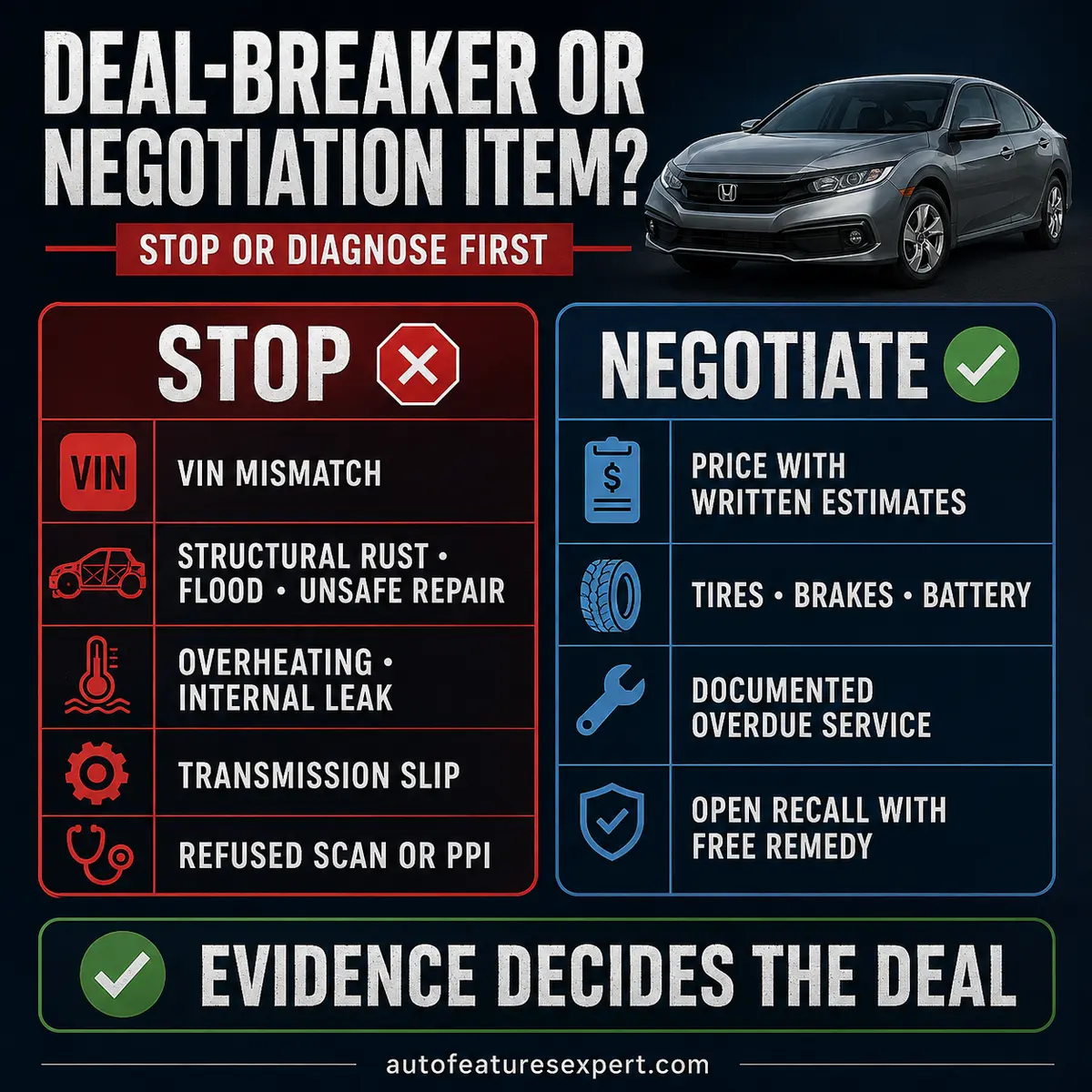
- Price the car as a hybrid, not as a regular Civic. A cheap purchase price can disappear quickly if the high-voltage battery needs immediate work.
The one record that can change my answer
On a 2003–2011 Civic Hybrid, a properly documented battery replacement can change the buying decision more than 20,000 or 30,000 miles on the odometer. I would rather see an older car with a recent, correctly installed pack and clear service history than a supposedly “low-mileage survivor” with an original battery and no records.
That is also why blanket internet advice such as “never buy a Civic Hybrid” is too crude. The expensive part is not the nameplate. It is the unresolved condition of an aging hybrid system. Once you know the battery history, software status, fault codes and road-test behavior, the car becomes much easier to judge.
So, which Honda Civic Hybrid years would I avoid?
I would not automatically reject every car from one year, but 2006–2008 are the years I would require the strongest evidence before buying. Honda’s own battery-deterioration product update makes them the clearest caution group. I would treat 2003–2005 as high-risk because of age and battery history, and I would buy 2009–2011 only with convincing IMA documentation.
For someone who specifically wants the older Civic Hybrid, 2012–2015 is where I would start shopping. The lithium-ion battery generation is newer, the 2006–2008 deterioration campaign does not apply, and 2013–2015 cars are the easiest recommendation when condition and price are comparable.
For a complete pre-purchase process beyond the hybrid system, use our Honda Civic buying guide and insist on an independent inspection before money changes hands.
Sources used for this guide
- American Honda Service Bulletin 10-034 — 2006–2008 Civic Hybrid IMA battery deterioration product update.
- American Honda Service Bulletin 12-077 via NHTSA — IMA battery warranty extension for eligible 2003–2008 Civic Hybrids.
- American Honda Service Bulletin 10-083 via NHTSA — battery type and software matching for 2003–2011 Civic Hybrids.
- Honda: All-New 2012 Civic World Debut — introduction of the lithium-ion battery in the 2012 Civic Hybrid.
- Honda: 2025 Civic Hybrid — current-generation Civic Hybrid and two-motor hybrid system context.
About This Article
Author: Alex Fric, Automotive Research Editor
Last verified: September 9, 2026
Scope: U.S.-market Honda Civic Hybrid used-buying risk, with emphasis on Honda technical documents, battery-generation differences and evidence a buyer can verify on an individual car.