Search for Honda Civic 2.0 reliability and the usual answer is simple: the 2.0 is the safe engine. That is broadly fair for the naturally aspirated Civic sold from 2016 through 2024, but it needs one important footnote. Honda changed the base 2.0-liter engine for 2025, so the older engine’s reputation should not be carried over as if nothing changed.
For a used buyer, that leaves two different questions. The older 2.0 has enough years on the road to judge with some confidence. The newer one does not. Neither point is dramatic, but mixing them together makes otherwise decent buying advice less useful.
Start by making sure you are talking about the same 2.0
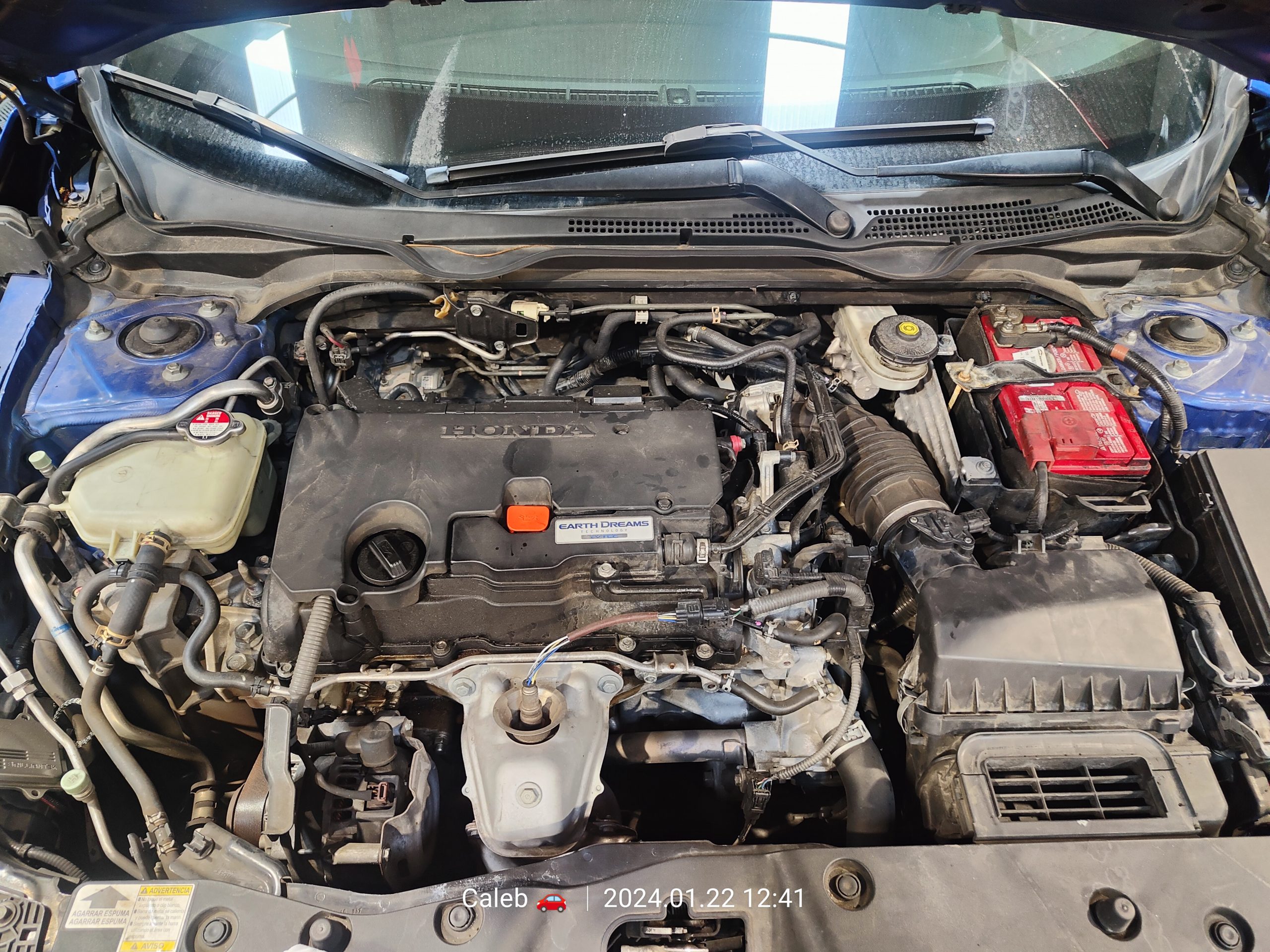
Honda’s U.S. regulatory paperwork identifies the naturally aspirated 2.0-liter used in the tenth-generation Civic as the K20C2. It made 158 hp, used sequential multiport fuel injection and did without a turbocharger. Honda was still listing a 158-hp 2.0 in the 2024 Civic LX and Sport.
The 2025 non-hybrid Civic still has a 2.0-liter four-cylinder, but Honda describes it as an Atkinson-cycle engine and rates it at 150 hp. That is enough of a change that the 2016–2024 reliability record should be treated as its own body of evidence.
The older engine’s appeal is not mysterious. It is naturally aspirated, modestly tuned and avoids the turbocharger, wastegate and charge-air hardware found on the 1.5T. Fewer parts do not guarantee a trouble-free car, but they do remove several expensive variables from a used-car inspection.
There is one 2016 recall worth checking
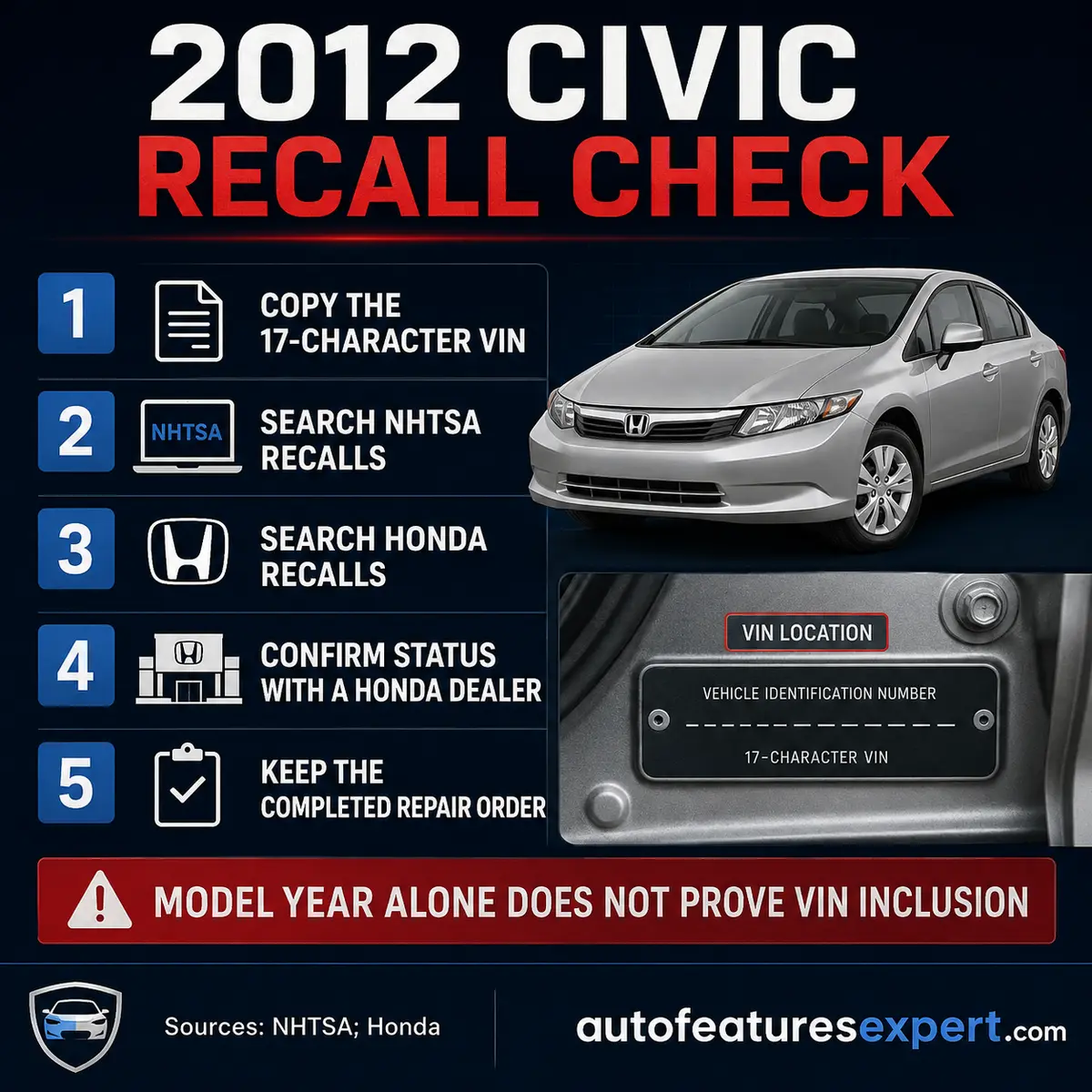
The main item that changes how I would shop an early 2.0 is Honda’s 2016 piston-pin recall. Service Bulletin 16-017 covers certain 2016 Civics with the 2.0-liter engine. Honda said a small number of engines may have been built with piston-pin snap rings that were missing or not fully seated. If a pin moved far enough, it could damage the engine.
That sounds ugly, but the bulletin is also very specific about eligibility: dealers were told to check the VIN. This was not a blanket finding that every 2016 Civic 2.0 had the problem.
So a 2016 is not a year I would automatically walk away from. I would simply want the VIN checked before buying it. If the campaign applies, there should be a record of the inspection or repair. If the seller cannot show anything, Honda or NHTSA can confirm the recall status from the VIN.
A later oil-leak note is much smaller than the headline makes it sound
Honda also sent dealers a technical information request in 2024 asking for certain 2023 Civic 2.0L cars with oil leaking from the head-cover gasket. The company wanted parts back so it could investigate the cause. The original message is in the NHTSA service-bulletin archive.
It was not a recall, and the document does not tell us that 2023 Civics have a widespread engine defect. It does give a used buyer one easy place to look. With the engine cold, check the top of the engine for fresh oil, oily dirt around the head-cover gasket or signs that the area was recently cleaned. A repair invoice is better than a spotless engine bay with no explanation.
What the public record does not tell us
There is no public Honda database showing the lifetime failure rate of every K20C2. Owner forums are useful for spotting patterns, but they cannot supply that missing denominator. A forum can tell you that ten owners had a problem; it usually cannot tell you how many thousands of comparable cars did not.
That matters with this engine because the internet tends to swing between two extremes: either the K20C2 is described as bulletproof, or a single recall or leak report gets turned into proof that a model year is bad. Neither is a particularly good way to shop for a used car.
The more defensible reading is less exciting. The 2016–2024 2.0 has a relatively simple layout and has been on the road long enough that major problems have not defined its reputation. There is a VIN-specific recall on some 2016 cars, and there are normal age, maintenance and leak checks that still matter.
What I would look for on a used one
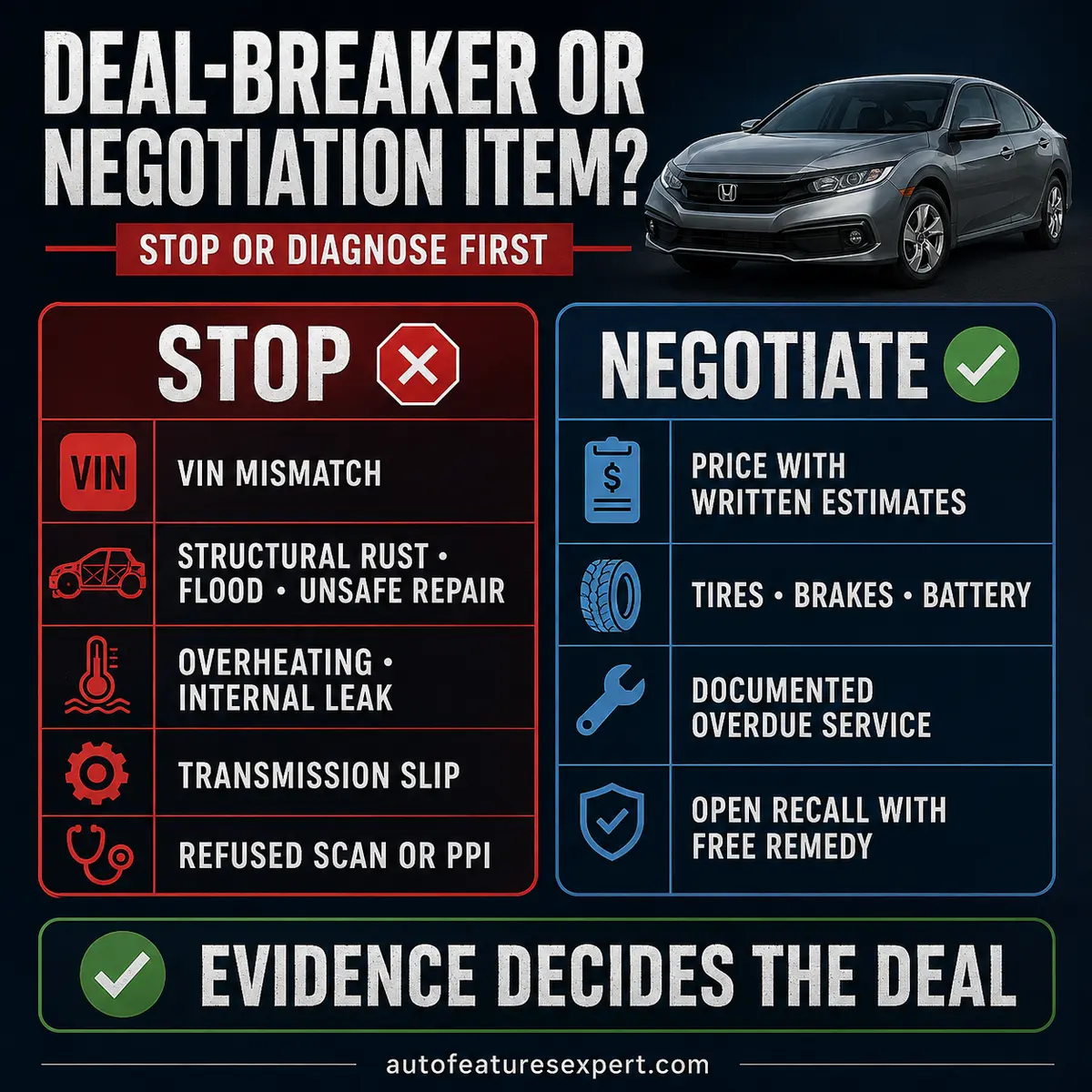
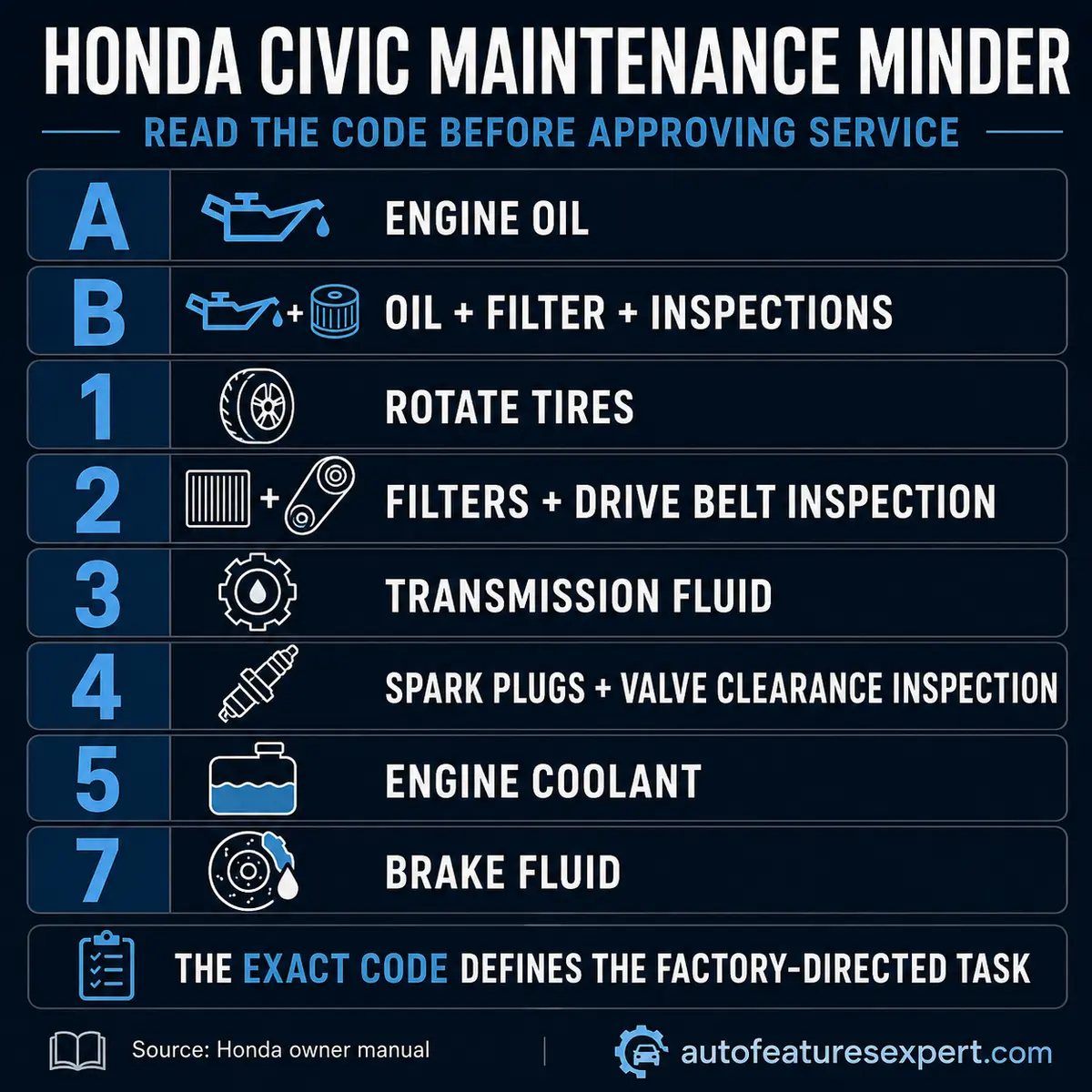
Once the 2016 recall question is out of the way, the individual car matters more than small differences between model years. I would want to see the engine completely cold, check the oil and coolant before the drive, scan for stored and pending codes, and look closely for leaks after the car is fully warm.
The CVT deserves its own inspection. A good 2.0 engine does not rescue a transmission that has been neglected. Ask for fluid-service records and pay attention to shudder, hesitation, unusual noise or inconsistent takeoff once the drivetrain is hot. Our Honda Civic CVT guide goes deeper into that side of the car.
Modifications are another reason to slow down. The K20C2 was not a high-output engine from the factory, so an intake or exhaust is not automatically a concern. An ECU tune, unexplained wiring changes or a car that has obviously been driven hard deserves more scrutiny than a stock example with boring service receipts.
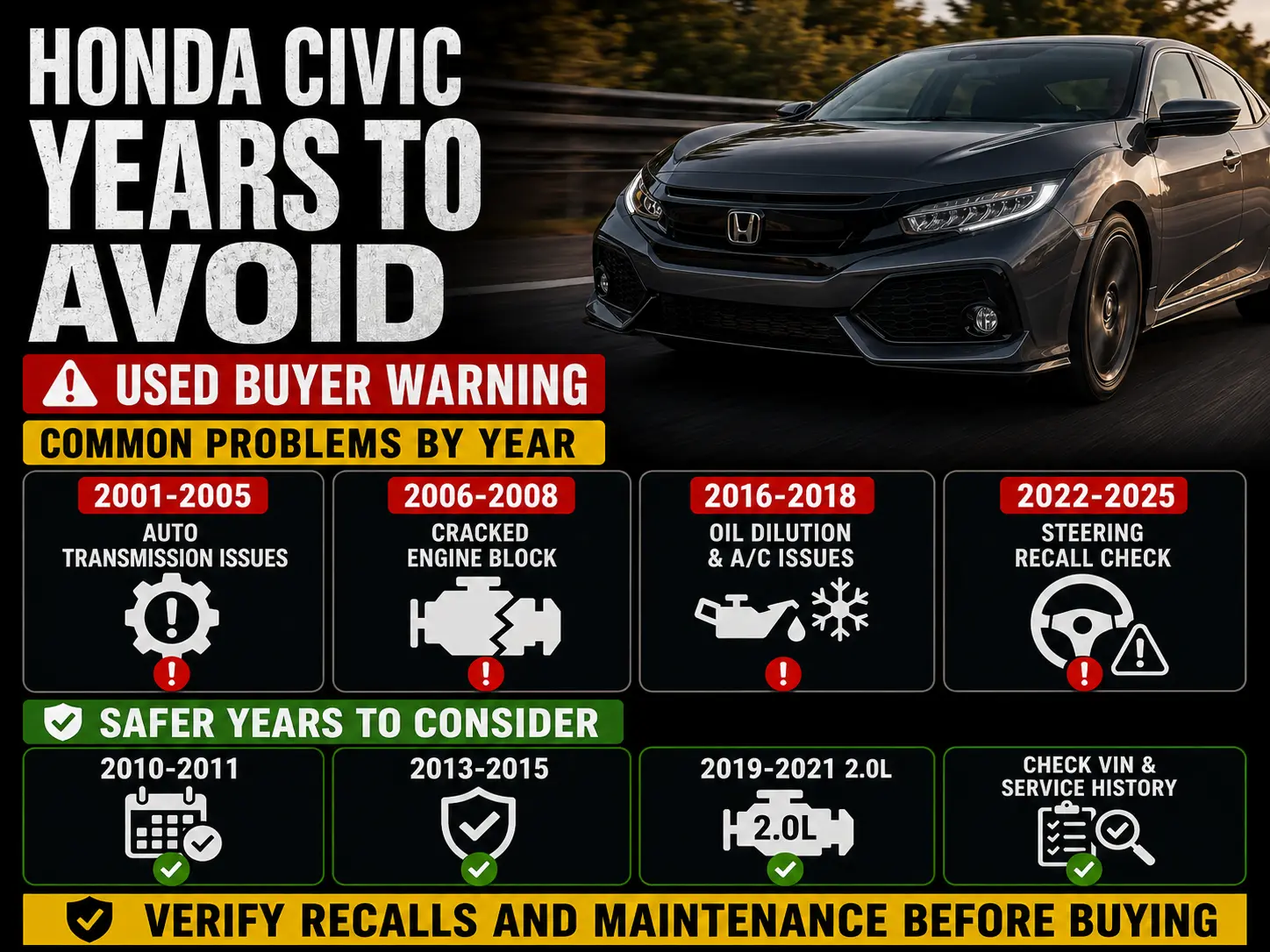
For someone shopping primarily on reliability, a clean 2017–2024 2.0 with documented maintenance is the uncomplicated choice. A 2016 belongs in the same conversation once the piston-pin recall status is confirmed. With a 2025 or 2026, there simply is not enough long-term history yet to make the same statement. That is not a warning about the newer engine; it is just where the evidence currently stops.
If two cars are otherwise equal, I would take the one with the better records, cleaner cold start and healthier CVT over the one with the “better” model year. On these Civics, that usually tells you more about the car you are actually buying.